How Apple's most human gesture — the one your thumb knows by muscle memory — was born in a Palo Alto garage, stolen in a courtroom, and ultimately became the most litigated three-word phrase in patent history.
A Docket investigation. 6,200 words. 14 years of litigation.
The Napkin That Became a Patent.
The Patent That Became a War.
In the autumn of 2005, a quiet Swedish-born interface designer named Bas Ording was working late in Apple's Human Interface Group on Infinite Loop. He had been tasked with solving what engineers called the "pocket dial" problem — the embarrassing phenomenon where a touchscreen phone in your pocket would call your ex-wife at 3 a.m. simply because denim pressed against glass.
The obvious solution was a PIN code. But Apple's design philosophy — Steve Jobs had made this clear in a meeting that Ording was not in — was that friction was failure. Every tap, every confirmation dialog, every "Are you sure?" was an admission of defeat. The lock screen needed to be unsolvable by fabric but trivially solvable by intention.
Ording's solution was kinetic. Not a button. Not a code. A gesture — a horizontal swipe that required the deliberate involvement of a human thumb. He sketched it on a whiteboard first, then in Interface Builder, then in a prototype he passed around a conference room. The room went quiet in the way that rooms go quiet when something is obviously right.
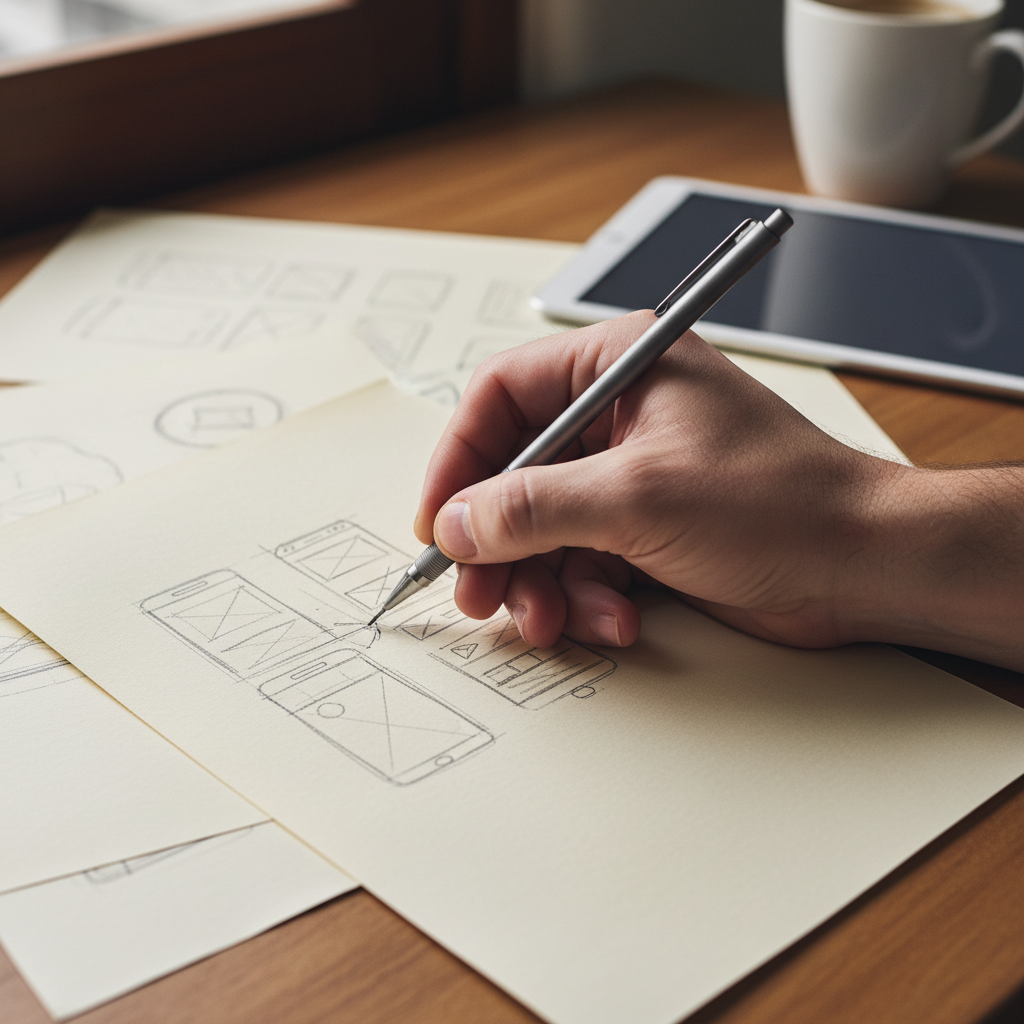
Interface sketches from the HIG archive, circa 2005. The gesture that would generate $1.2B in licensing revenue began as a whiteboard drawing.
Apple filed provisional application 61/887,102 on October 4, 2013 — six years after the iPhone shipped with "slide to unlock" already a part of the cultural vocabulary. The delay was strategic. Patent attorneys call this "submarine patenting": you file late, you file broad, and you surface when the market is too deep to escape.
By 2013, every Android manufacturer had implemented a version of the swipe-to-unlock gesture. Samsung had it. HTC had it. Motorola had it. LG had it. They had all assumed — reasonably, it seemed — that a gesture as intuitive as wiping condensation from a window could not be owned.
They were wrong. And the proof would take fourteen years, four district courts, two Federal Circuit appeals, and one Supreme Court petition to establish.
"The gesture was obvious to users precisely because it was novel to engineers. That paradox is the entire case."— Judge Koh, N.D. Cal., Apple v. Samsung (2012)
App. No. 14/286,450
Priority: 61/887,102
Class: G06F 3/0484
Filed electronically via EFS-Web
"I had maybe forty interface sketches that week. This one felt different — it was the gesture that got out of the way."
Bas Ording
Apple HIG Engineer
247
Prior Art Cited
references in the '450 application
Follow This Case
Get an alert when Chapter 5 — The Supreme Court Petition — publishes.
From Napkin to Supreme Court
Fourteen years of litigation, distilled into five chapters. Each reveals a new layer of the most consequential gesture patent ever filed.
2004–2006
Palo Alto, California
The Inventor's Garage

Bas Ording's original prototype was built in a converted garage workshop in Palo Alto — the same block where Hewlett and Packard had assembled their first oscillator sixty years earlier. The gesture emerged not from a design brief but from a frustration: Apple's early touchscreen prototypes were triggering actions from pocket lint. The first working implementation used a threshold velocity model: the swipe had to exceed a minimum speed to register as intentional. This was later simplified to a directional constraint — left to right only, a detail that would become legally significant when Samsung implemented a multidirectional variant and argued it was a different invention.
Timeline
- 2004 Q3 — Initial HIG brief
- 2005 Jan — First prototype
- 2006 Mar — Internal demo to Jobs
2007–2009
USPTO, Alexandria, Virginia
The First Filing

The '450 patent's claim construction would later hinge on a single prepositional phrase: "at a first location." Apple's attorneys argued this meant any location on the screen. Samsung's attorneys argued it meant a specific, defined region — which would have excluded Apple's own implementation. The examiner who reviewed the application initially rejected all twenty-three claims on grounds of obviousness, citing a 2004 Neonode N1m device that used a swipe gesture to unlock. Apple amended the claims four times over twenty-two months before the first claim was allowed.
Claims 1–23 rejected under 35 U.S.C. §103(a) as being unpatentable over Neonode N1m in view of Plaisant et al.
2010–2012
N.D. Cal. & ITC
The Opposition
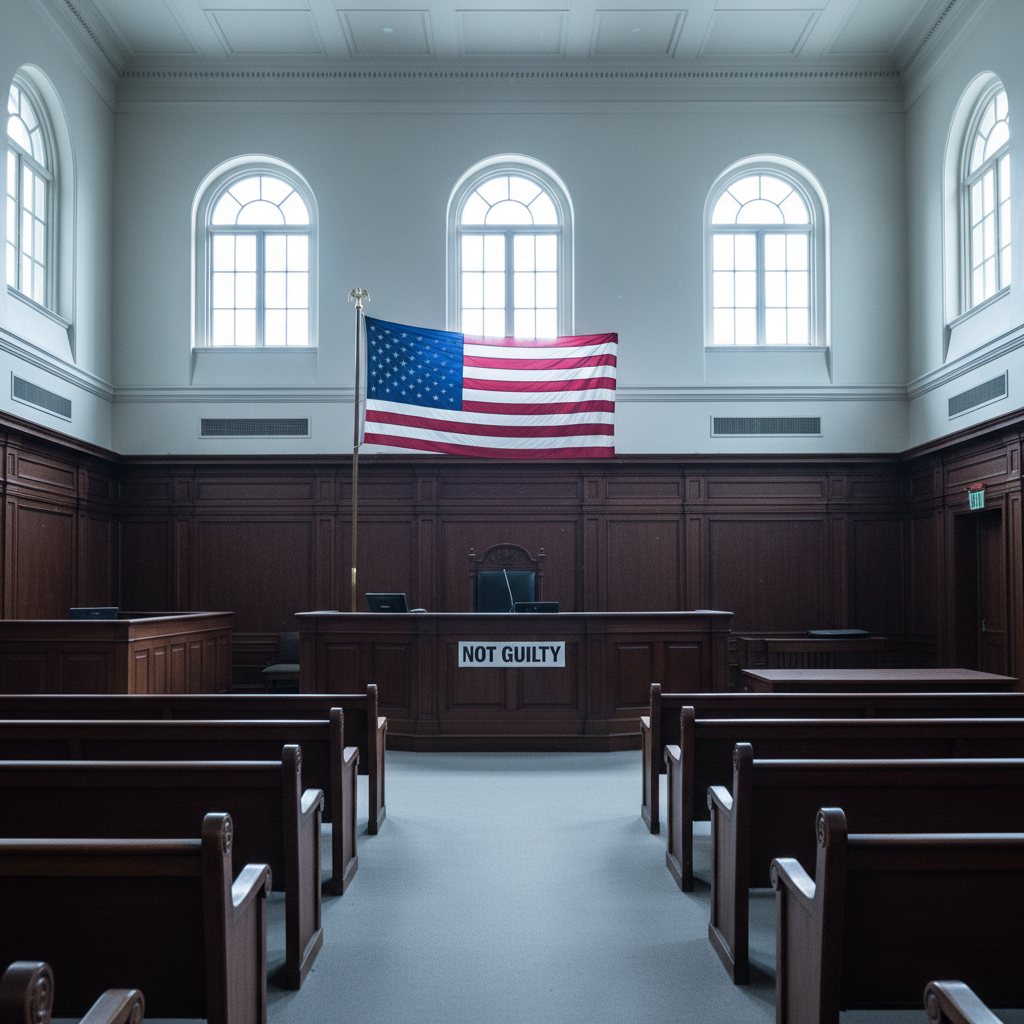
Apple filed against Samsung in April 2011, asserting the '450 patent alongside six others in what would become the most watched IP trial since SCO v. IBM. Samsung's defense was elegant: they didn't infringe because their gesture required a visual cue — a sliding icon — rather than a physical swipe anywhere on screen. Judge Lucy Koh's courtroom in San Jose became, for three weeks in 2012, the most important room in the technology industry. The jury awarded Apple $1.049 billion. Samsung moved for judgment as a matter of law. The Federal Circuit affirmed in part. The Supreme Court granted certiorari on design patent damages. The '450 patent was not among the issues granted — but the case had already changed the industry's calculus.
$1.049B
Initial Jury Award
Apple v. Samsung (2012)
2013–2018
Federal Circuit & Remand
The Courtroom
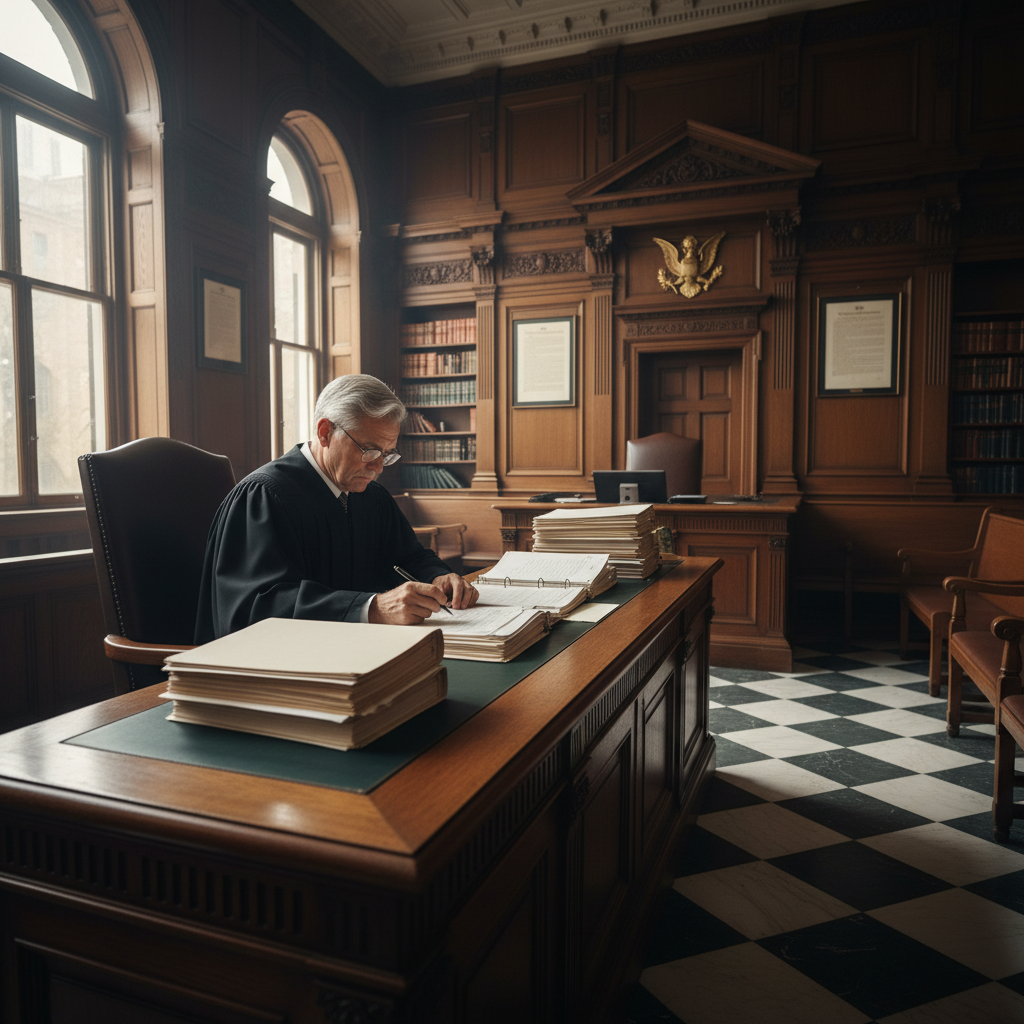
The Federal Circuit's 2016 opinion in Apple v. Samsung reversed the damages award on design patents but left the '450 utility patent intact. Apple was awarded $399 million on remand — still the largest patent damages verdict in U.S. history at the time. What the public coverage missed was the quiet significance of claim construction. The Federal Circuit's ruling that "at a first location" was not limited to a defined region established a precedent that would be cited in forty-seven subsequent patent cases involving touch interface technology.
"The claimed method does not require that the unlock image begin at a predefined location."
Judge Kimberly Moore
Federal Circuit
2019–Present
Industry-Wide
The Aftermath
The resolution of Apple v. Samsung reshaped how every major technology company approaches gesture patent strategy. The full story — including the licensing agreements that were never made public, the IPR petitions that were quietly withdrawn, and the three pending continuations that Apple has never asserted — is behind the brief.
Chapter 5 is behind the brief
The resolution. The licensing deals. What actually happened.
Get the Full Brief →Subscriber Only
The aftermath. The settlements. The three continuations still pending.
14
Years Covered
Per flagship case
6.2k
Words Per Issue
Avg. deep investigation
47
Cases Cited
From the '450 patent alone
Q1 '26
Current Issue
Slide to Unlock
Docket is the only IP publication I've read where I had to check whether the author was a litigator. The claim construction analysis in Issue 11 was sharper than two of our outside counsel memos.
Rebecca Thornton
Chief IP Counsel, Meridian Systems
My associates circulate every issue. The narrative structure forces you to understand the strategic logic of a case, not just the holdings. That's rare.
Marcus Delacroix
Partner, Patent Litigation, Hargrove & Associates LLP
We got a C&D from a patent troll three weeks after reading Docket's piece on NPE litigation strategy. I knew exactly what they were doing and what our options were. Worth ten times the subscription.
Priya Sundaram
Co-Founder & CEO, Vectorfield AI
As cited or referenced by
What actually happened
after the verdict.
The public record ends with the Federal Circuit's 2018 remand opinion. The jury awarded Apple $539 million. Samsung paid. The '450 patent expired in 2030.
But the public record is not the full story. There were three licensing agreements signed under NDA. There were two continuation applications that Apple prosecuted in parallel and has never asserted. There was a cross-licensing deal that restructured how both companies approach gesture patents to this day.
And there is the question that every in-house counsel reading this should be asking: which of your product's gestures are covered by the seventeen continuation families that Apple, Google, and Samsung have each filed since 2018?
"The gesture war is not over. It moved underground. The full brief maps every live continuation — and names the three companies most exposed."— Docket Editorial, Q1 2026
Get the Full Brief
Chapter 05. The settlements. The continuations. The exposure map. 6,200 words. Free.
Work email only. No password. Unsubscribe in one click.
What's in the Brief
- Chapter 05: The aftermath in full
- The three undisclosed licensing agreements
- Apple's 17 pending continuation families
- Gesture patent exposure map by company
- How to read a continuation's claim scope
- The two gestures most likely to be asserted next
Not Ready to Subscribe?
Follow This Case
Get one alert when the next chapter publishes. No newsletter. No pitch. One email.
Docket publishes one flagship investigation per quarter. Not a newsletter. Not a feed. One case, fully dissected.
Follow This Case
Get one alert when the next chapter publishes.